As buildings age, their structural integrity, aesthetic appeal, and functional usability naturally decline. In Uganda, where varying weather conditions, intense UV exposure, and heavy bi-annual rainfall pose constant challenges, proactive building maintenance and professional renovation are essential for preserving property value.
However, successful renovation is rarely about mere cosmetic updates. It requires a fundamental understanding of engineering principles, material science, and the specific environmental stressors present in Kampala and across Uganda. This comprehensive guide details the best practices property owners and facility managers should adopt when planning and executing a renovation project.
1. Renovation vs. Rebuilding: Making the Right Decision
Before committing to a renovation, property owners must answer a fundamental question: Is the building worth saving? This decision should be based on a professional structural assessment, not just a visual inspection of the finishes.
- When to Renovate: If the primary structural elements (foundations, columns, slabs) are sound, and the defects are largely confined to finishes, plumbing, electrical systems, or non-load-bearing walls, renovation is highly cost-effective - often saving 30-50% compared to new construction.
- When to Rebuild: If the building suffers from severe foundation settlement, extensive corrosion of structural reinforcement steel (spalling concrete), or if the intended new use requires loads the existing frame cannot support, demolition and rebuilding is the safer, more economical long-term choice.
2. Understanding Plumbing Failures in Ugandan Buildings
Plumbing degradation is arguably the most common driver for major building renovations in Uganda. Many buildings constructed over a decade ago utilized Galvanized Iron (GI) pipes. While strong, GI pipes are highly susceptible to internal corrosion, especially with fluctuating municipal water quality.
The Consequences of Failing Plumbing:
- Restricted Flow: Rust buildup inside GI pipes significantly reduces water pressure.
- Concealed Leaks: Corroded joints leak slowly behind walls, causing extensive damage to plaster and encouraging mold growth long before the leak is visible on the surface.
- Contamination: Rust particles discolour the water supply, rendering it unsuitable for domestic or institutional use.
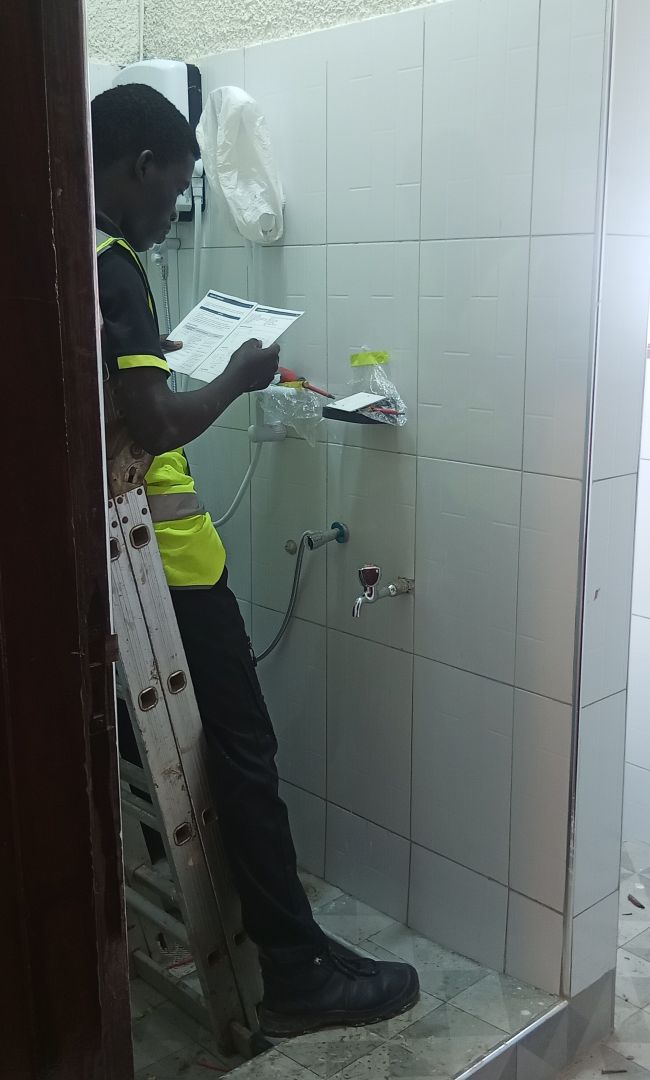
The Best Practice Solution: During a renovation, all aging GI pipework should be stripped out. The industry standard replacement is PPR (Polypropylene Random Copolymer) piping. PPR offers excellent corrosion resistance, handles both hot and cold water efficiently, and utilizes fusion-welded joints that essentially eliminate the risk of leaks at connections. This approach was successfully implemented in our recent Nsambya Institutional Building renovation.
3. Moisture Damage: The Silent Threat
Moisture is the primary enemy of building longevity. In Uganda, moisture damage typically manifests as peeling paint, bubbling plaster, efflorescence (white powdery deposits on walls), and persistent musty odors.
Treating the symptom (by simply scraping and repainting) is a costly mistake that guarantees the problem will return. Best practice dictates identifying and rectifying the root cause:
- Rising Damp: Often caused by a failed or absent Damp Proof Course (DPC) in the foundation walls. Remediation may require injecting specialized chemical damp-proofing treatments into the masonry.
- Penetrating Damp: Usually results from cracked exterior render, porous brickwork, or failing window seals allowing rain to enter.
- Internal Leaks: As mentioned above, often stemming from compromised plumbing or poorly sealed wet areas.
4. Waterproofing: The Most Overlooked Investment
Waterproofing is critical, particularly in wet areas (bathrooms, kitchens, laundry rooms) and on flat roofs or balconies. A common, severe mistake in Ugandan construction and renovation is tiling directly onto screed without an underlying waterproofing membrane.
Grout is not inherently waterproof. Over time, water seeps through grout lines, soaking the screed below. This leads to tile debonding, damage to the adjacent walls, and in multi-story buildings, leaks penetrating the ceiling below. Always insist on the application of a high-quality liquid-applied or sheet waterproofing membrane before any tiling commences.
5. Why Tiling Fails and How to Prevent It
Beyond the lack of waterproofing, tiling failures (cracking, "drummy" sounding tiles, or complete debonding) are usually the result of poor substrate preparation or incorrect material selection.
- Substrate Preparation: The surface must be clean, structurally sound, and perfectly level. Tiling over old, loose plaster or adhesive residue guarantees failure.
- Adhesive Selection: Using cheap, low-quality adhesive, or worse, attempting to adhere tiles with plain cement slurry in high-stress areas, is a false economy. High-quality, polymer-modified tile adhesives are necessary, especially for large-format porcelain tiles.
- Movement Joints: Large tiled areas require expansion joints to accommodate thermal movement, preventing tiles from tenting or cracking during temperature fluctuations.
6. Water Resilience Strategies for Ugandan Properties
Given the occasional unpredictability of municipal water supplies, building renovation presents the perfect opportunity to enhance a property's water resilience. Retrofitting water storage systems is far easier and more cost-effective when walls are already opened and plumbing is being upgraded.
Installing adequately sized reservoir tanks ensures a continuous supply during outages. Furthermore, integrating rainwater harvesting systems - connecting roof gutters to dedicated storage tanks via first-flush diverters and filtration screens - provides a sustainable supplementary water source for non-potable uses, significantly reducing utility costs for large facilities.
7. Institutional Facility Maintenance Considerations
Schools, hospitals, religious buildings, and NGO facilities face unique challenges due to high occupancy rates and intensive daily use. When renovating these spaces, the focus must shift heavily toward durability and hygiene.
- Flooring: High-traffic corridors require highly durable surfaces. While tiles are common, traditional red oxide or polished concrete often provide superior longevity and easier maintenance at a lower lifecycle cost.
- Sanitary Ware: Institutional bathrooms require heavy-duty fixtures designed for public use, rather than standard residential fittings.
- Accessibility: Renovation is the ideal time to upgrade facilities to meet modern accessibility standards, including wider doors and grab rails.
8. The Importance of Phased Execution
Renovating an occupied building - such as a functioning school or an operational office - requires proper planning. Phased execution is a best practice that minimizes disruption.
This involves sectioning off the building and completing works (demolition, plumbing, electrical, and finishing) in one defined area before moving to the next. This ensures that the facility can maintain partial operations and that occupants are kept safely isolated from construction zones, dust, and noise.
9. Lifecycle Cost Reduction Through Smart Renovation
Initial renovation costs must be weighed against long-term lifecycle costs. Opting for the cheapest materials during a renovation often leads to accelerated deterioration and the need for premature repairs.
Investing in higher-quality materials - such as PPR piping, premium waterproofing membranes, and durable floor finishes - significantly extends the interval between required maintenance cycles. This "Total Cost of Ownership" approach is especially critical for commercial and institutional property managers.
10. Maintenance Planning for Long-Term Building Health
The final best practice occurs after the renovation is complete: establishing a proactive maintenance plan. Buildings are dynamic systems that require ongoing attention. Scheduled inspections of roofs, gutters, plumbing joints, and exterior seals can identify minor issues before they cascade into major failures. A small leak fixed today prevents a massive plastering and painting job next year.
Ready to Upgrade Your Property?
Whether you need to rectify defects, upgrade infrastructure, or completely modernize an aging structure, professional engineering-led execution is key to long-term success.
Explore Renovation Services Contact Us