Kampala is famous for its hills, but as land gets more expensive, people are increasingly building in the valleys. Today, many new developments are happening in former wetlands like Lubigi, Bwaise, Kalerwe, Ndeeba, Nansana, and Kira. If you're building in these areas, you're facing some of the toughest soil conditions in all of East Africa.
The core problem is simple: wetland soils are basically soft, spongy clay and dead plant matter (peat). They cannot hold much weight. A foundation that works perfectly on the hard red soil of a Kampala hilltop will sink and crack if you try to use it in a swamp. In this article, we'll look at the two best ways to build a foundation in a wetland, using real engineering data.
The Lubigi Problem: Why Swamp Soil is Tricky
When we test the soil in places like the Lubigi wetland, we almost always find the same dangerous pattern beneath the surface:
| How Deep? | What's Down There? | How Much Weight Can It Hold? | Water Level |
|---|---|---|---|
| 0 to 1.5 meters | Fake ground (dumped soil, murram, rubbish) | Unpredictable | Right at the surface |
| 1.5 to 4.0 meters | Soft, black organic clay and peat | Very little (15-30 kN/m²) | Completely flooded |
| 4.0 to 8.0 meters | Sticky, medium clay | Average (50-80 kN/m²) | Completely flooded |
| Past 8.0 meters | Hard, solid rock and laterite | Very strong (150+ kN/m²) | Deep underground |
The danger zone is that 1.5 to 4.0-meter layer of soft, black clay. This soil acts like a sponge. If you build a heavy house on it, the weight will squeeze the water out over several months or years, and your house will slowly sink. Worse, because it's full of old plant matter, it literally rots away over time, leaving empty holes right under your foundation.
A Costly Mistake to Avoid
Never trust the top layer of dumped dirt (fill material). Many people dump murram into a swamp, see that it looks dry, and start building. That top dirt is heavy, and it will eventually sink into the soft clay below it, taking your house down with it.
Solution 1: Pile Foundations (Deep Columns)
A pile foundation ignores the bad soil completely. Instead, we drive long concrete pillars (piles) deep into the ground until they hit the hard rock layer (usually 8 to 15 meters down). The building then rests on these underground pillars.
How We Do It in Kampala
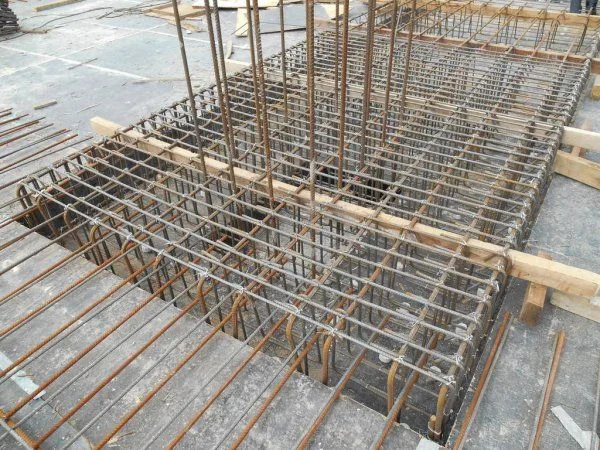
- Drilled Piles (Bored cast-in-situ): We use a giant drill to make a deep hole, drop in a steel cage, and fill it with concrete. This is great for tight city spaces because it doesn't shake the neighbor's houses.
- Driven Piles: We buy pre-made concrete pillars and use a massive hammer machine to pound them into the ground. It's faster but very noisy and shakes the ground a lot.
The Good Stuff
- Your building won't sink because it's sitting on solid rock.
- It's the only safe way to build tall apartments (5+ floors) in a wetland.
- It is a proven, permanent engineering solution.
The Catch
- It is expensive. A single pile can cost between UGX 800,000 to 2.5 million, and you'll need many of them.
- You have to hire specialized heavy machines.
- You must do a deep soil test first so the engineer knows exactly how far down the rock is.
Solution 2: Raft Foundations (The Floating Slab)
Instead of digging deep, a raft foundation is one giant, thick slab of reinforced concrete that covers the entire footprint of your house. It works like a wide boat floating on water, spreading the weight of your house so no single spot sinks too much.
When a Raft works well:
- For light buildings, like a bungalow or a simple two-story house.
- If the soil test shows the ground isn't too soft.
- If you don't mind the whole house settling evenly by a few centimeters over time.
When a Raft is a disaster:
- If the black clay is very deep; the house will sink too far.
- If you try to build heavy, multi-story apartments on it.
- If the soil on the left side of your plot is softer than the right side. The house will tilt and crack.
Quick Comparison: Piles vs. Raft
| What to consider | Pile Foundation (Deep) | Raft Foundation (Floating) |
|---|---|---|
| How tall can you build? | Any height (2 to 10+ floors) | Only 1 or 2 floors |
| Will the building sink? | Almost never (less than 10mm) | Yes, a little bit (25-100mm) |
| Estimated cost for a small building | UGX 30-60 million | UGX 15-25 million |
| How long does it take? | 3 to 6 weeks | 1 to 2 weeks |
| Risk of cracking | Very Low | Medium to High |
Don't Forget the Law and the Environment
Building in a swamp isn't just an engineering problem; it's a legal one. Uganda has strict laws protecting wetlands. The National Environment Management Authority (NEMA) has the power to demolish any building that blocks water channels or destroys protected swamps.
Before you buy wetland property, you should:
- Check with NEMA to make sure the land is legally approved for building.
- Get an Environmental Impact Assessment (EIA) if the law requires it.
- Plan proper drainage so you don't flood your neighbors.
- Remember that as climate change brings heavier rains, the water level on your plot might rise higher in the future.
Cheap land in a valley will usually force you to buy a very expensive foundation. Always pay for a professional soil test before you buy the land—it can save you millions.
Do you own land in a swampy area and aren't sure how to build on it safely? Contact Aura Build Ltd. We handle the soil testing, the foundation design, and the construction to make sure your building never cracks.